Affiliate disclosure: This post contains affiliate links. If you click a link and make a purchase, I may earn a small commission at no extra cost to you.
I’ve travelled to Costa Rica a few times during my jaunts up and down Latin America and I have to say it’s never been my favourite country. The abundance of wildlife is what keeps drawing me back but up until this year, I hadn’t found a spot that really captured my heart. All that changed when I visited the Osa Peninsula and Drake Bay.
The Osa is everything I wanted Costa Rica to be. Still relatively untouched by mass tourism, remote, and easy to find real grassroots local experiences. The Osa Peninsula offers a variety of experiences including wildlife spotting, water sports, and cultural activities that allow you to see the heart of the area.
The region isn’t for everyone, the remote and basic accommodations dotted around Drake Bay, Costa Rica doesn’t usually cater to the uber-luxury traveler. If you’re not a fan of bugs, spiders or sharing your shower with local bats then you should consider staying in a more upscale rainforest eco-lodge. If you enjoy being surrounded by nature, steps away from rivers and beaches and waking up to the sounds of monkeys rustling in the treetops, then I definitely recommend giving the Osa a try.


What to do in the Osa Peninsula
The biggest draw of the Osa is that you are quite literally surrounded by nature. This is one the most remote places you can visit in the country and some of the must-do activities involve either a hike or boat ride to access it. My best advice is to just relax, switch off your phone and let your jungle side come out.
Drake Bay
There are a few options where you can base yourself while exploring the Osa Peninsula but I definitely recommend Drake Bay. From Drake, you’ll be close to Cano Island, and Corcovado National Park is a short boat ride away. It’s more rustic than the larger Puerto Jimenez and has no ATM in town but you’ll feel more like you’ve gotten away from it all. It’s almost an attraction in itself as there are several remote beaches to swim in and plenty of trails to get lost on. For more ideas once you’re based there, see my guide to things to do in Drake Bay.
Corcovado National Park
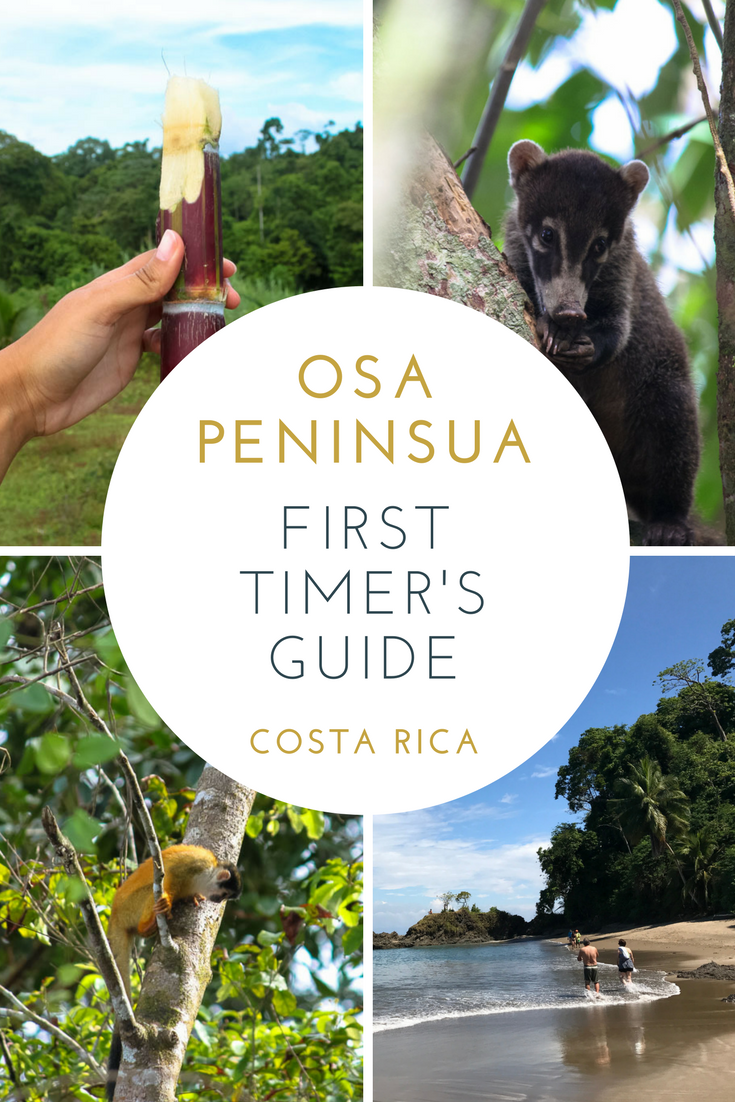
Corcovado packs a punch with 164 square miles of primary and secondary rainforests, 39 kilometers of beaches and 13 major ecosystems. It is Costa Rica’s largest national park, making up close to a third of the Osa Peninsula. On a hike through the park, you might encounter bull sharks and crocodiles swimming in the waters, and tapirs, jaguars, four species of monkeys, sloths, peccary, anteater, scarlet macaws, woodpecker, and coati on land.
There is a station where you can spend the night in some basic accommodation or you can visit for the day and hike through one of the trails. You are technically not allowed to bring food into the park so if staying overnight be mindful that you will need to budget from $20 per meal at the station.
A tour to Corcovado generally involves a boat ride to San Pedrillo Park Ranger Station’s entrance and includes a guided hike with lunch. Most people opt for this tour so wildlife viewing, while still abundant, is not as spectacular as the further away Sirena Station. I still saw a lot of animals but my group bumped into other groups a handful of times which makes the experience less “middle-of-nowhere” and more “run-of-the-mill”.


Cano Island
Cano Island (Isla del Caño) is a small 300-hectare island off the northern coast of the Osa Peninsula ringed by a great number of coral reefs.
Cano Island is considered the premier spot to snorkel and scuba dive in Costa Rica. Year-round warm water makes it worth the 45-minute boat trip from Drake Bay as is the chance to spot whales and dolphins along the way. The clear waters are home to dolphins, rays, all kinds of fish, eels, turtles, sharks, and whales.
Horseback ride or hike to San Josecito beach
Playa San Josecito is a white-sand, crescent-shaped beach located 6 km south of Drake Bay. A really unique activity is to get to the beach on horseback. While lounging on the beach keep an eye out for sloths and monkeys resting in the trees overhead.
You can also hike to San Josecito via a 2.5-hour long trail. You will have to cross Rio Claro along the way which could involve wadding through calf deep water or taking a short ferry ride across when the water is at its highest. Make sure to take plenty of water and keep your eye out for wildlife along the way. For a full day option take a boat to Rincon Beach which is a bit further along and hike back to Drake Bay, stopping at San Josecito along the way.
Canopy Tour
Costa Rica is the home of canopying and the Osa isn’t going to be left out when it comes to the exhilarating activity of zip lining. Your adventure usually begins high up in the hills reached by ATV or horseback.
The canopy tour consists of 9 platforms, 6 traverse cables, one over 100 meters long (300 ft), a 9 meter suspended observation walkway and a 25-meter rappel down to the edge of a stream for wildlife spotting.
Dolphin and Whale Watching Tours
There are two main whale seasons, December to April and July to October and the area is known for having the longest humpback whale season in the world. If you keep an eye out it’s entirely possible to spot whales breaching from the mainland but if you want to make sure to see these magnificent creatures then you can easily organise a tour in town. My top tip is to plan your visit to Cano Island first, as I was lucky to spot two whales and several dolphins just crossing over to the island.


Leave a Reply